Risify is built to optimize a Shopify store's AI and search visibility . Search engines and AI tools can only recommend what they can understand, and most Shopify stores give them far less to work with than they could: flat navigation, missing structured data, no FAQs, default metadata. Risify fixes that from inside your Shopify admin, and then shows you whether it is working.
It is not a magic button. This page sets clear expectations about what Risify handles, what still needs your input, and where the real value lies.
The Core Idea
When a shopper asks ChatGPT or Google AI Mode where to buy something, or searches Google, the answer depends on what each tool can read about your store: what you sell, how your products and categories relate, what questions you answer, and how your pages describe themselves. These are the signals Risify works on.
Everything in the app serves one of three jobs:
- Build the structure and content that search engines and AI tools read: structured data, navigation, FAQs and metadata.
- Find and fix the gaps with audits and page-level checks.
- Measure the result in Google rankings and AI answers, so you know what is working.
Tracking is the last step, not the first. The work happens in the pages themselves.
What Risify Does
Sets Up Structured Data
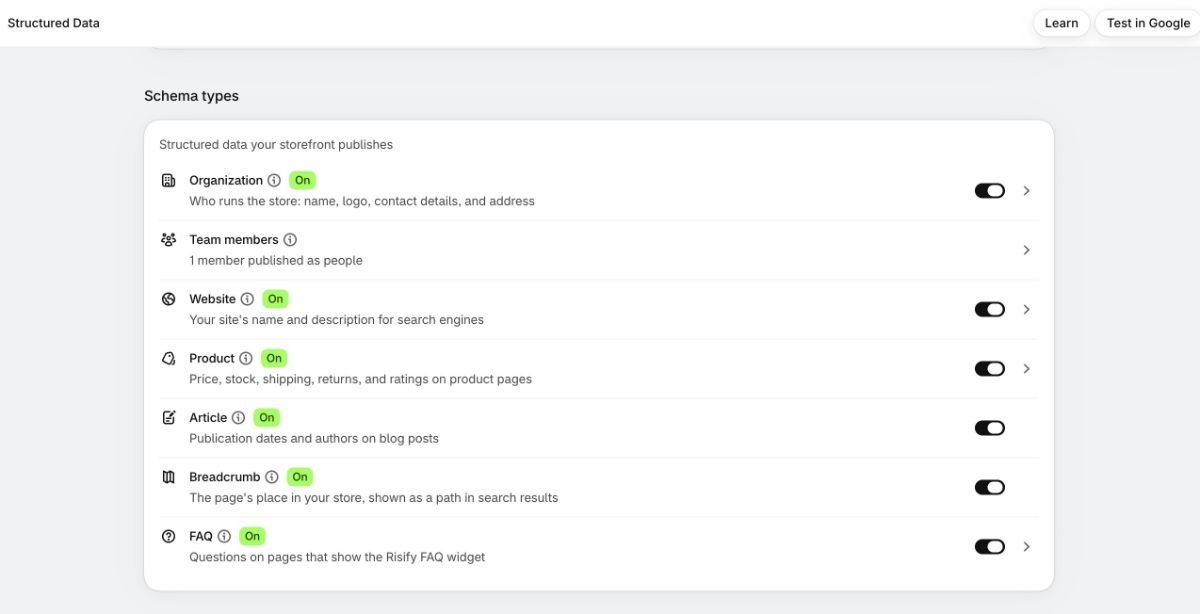
Risify publishes structured data (JSON-LD) for seven schema types: Organization, Team members, Website, Product, Article, Breadcrumb and FAQ. Once a type is on, the data is generated automatically on every relevant page through the Risify app embed. This is the most direct way to tell search engines and AI tools what each page is, and Shopify does not do it at this level of detail on its own.
Connects Your Catalog
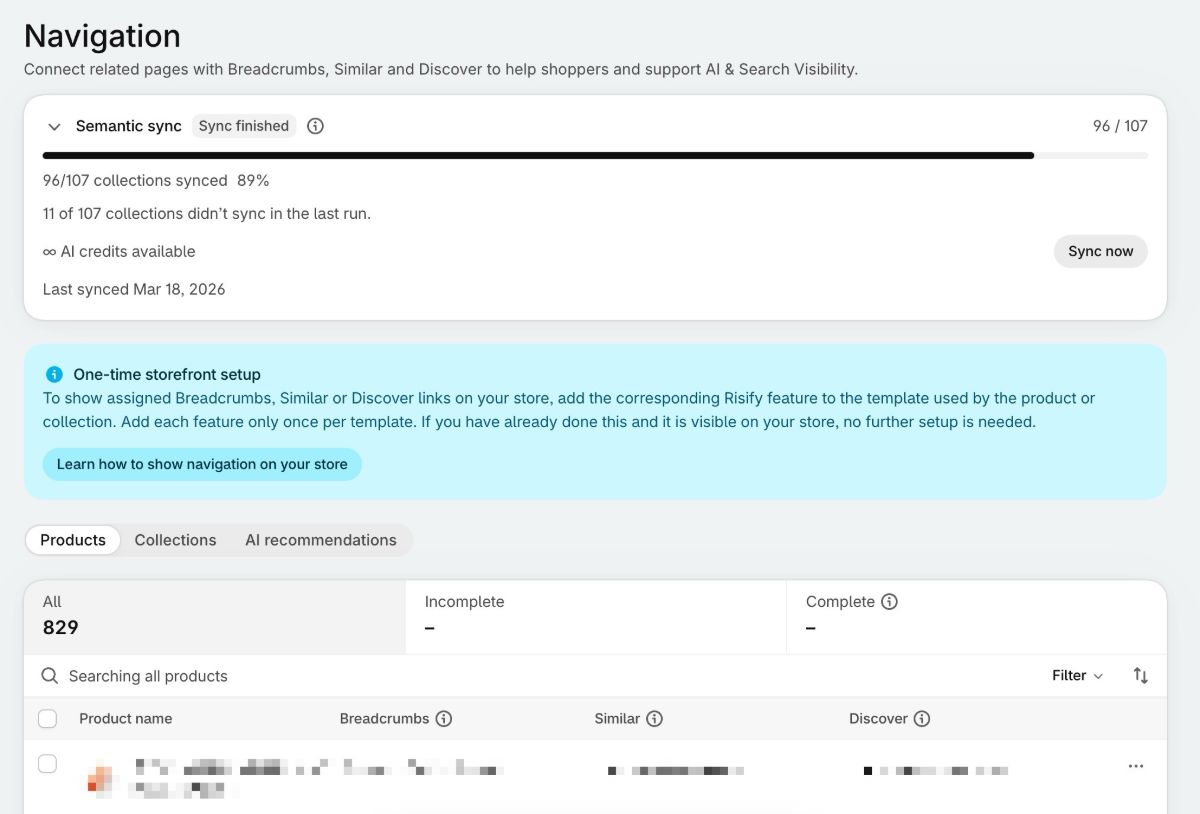
Risify builds the paths that show how your products and collections relate: breadcrumbs with a fixed hierarchy, Similar (related collection cards above the product grid) and Discover (related collection links below it). Shopify's native system does not support any of these. The result is a store shoppers can move through and a catalog whose structure search engines and AI tools can follow. Risify AI's semantic sync reads your collections and recommends the connections, so large catalogs can be mapped in bulk.
Helps You Answer Shopper Questions with FAQs
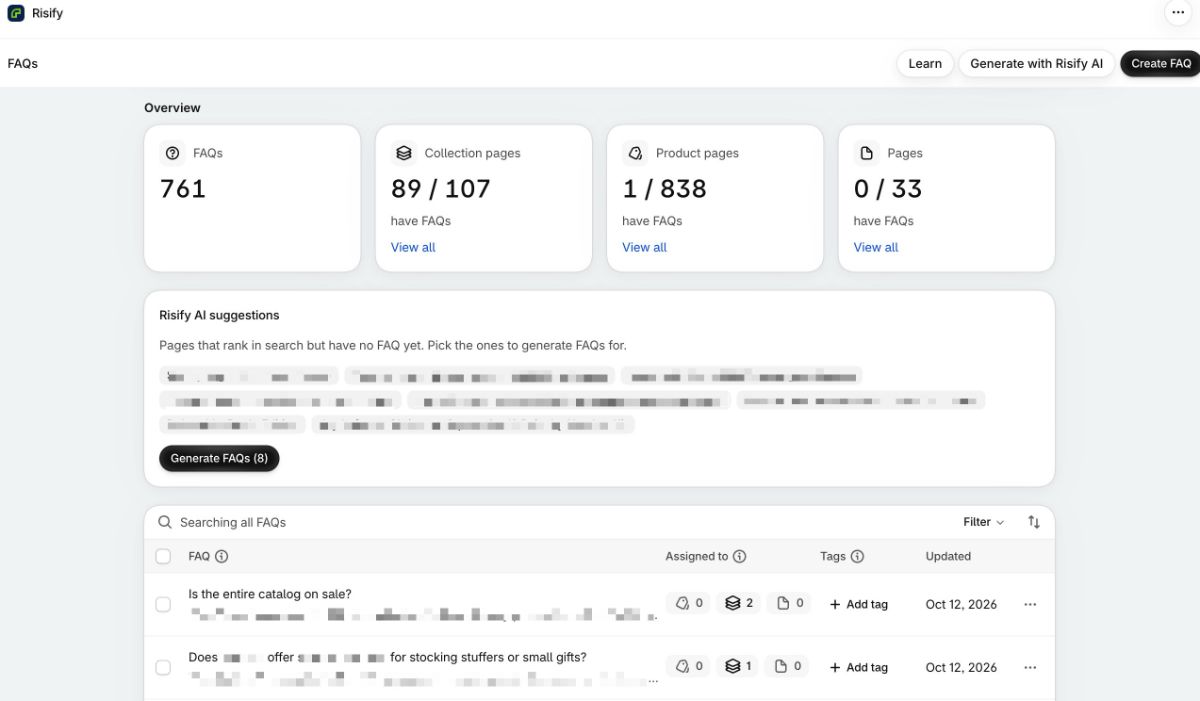
Build FAQs once and assign them to products, collections and pages. Every page that shows the FAQ section gets FAQ structured data, which gives AI tools direct question-and-answer pairs to draw on and cite. The Coverage tab shows which pages still have none.
Helps to Describe Every Page Properly
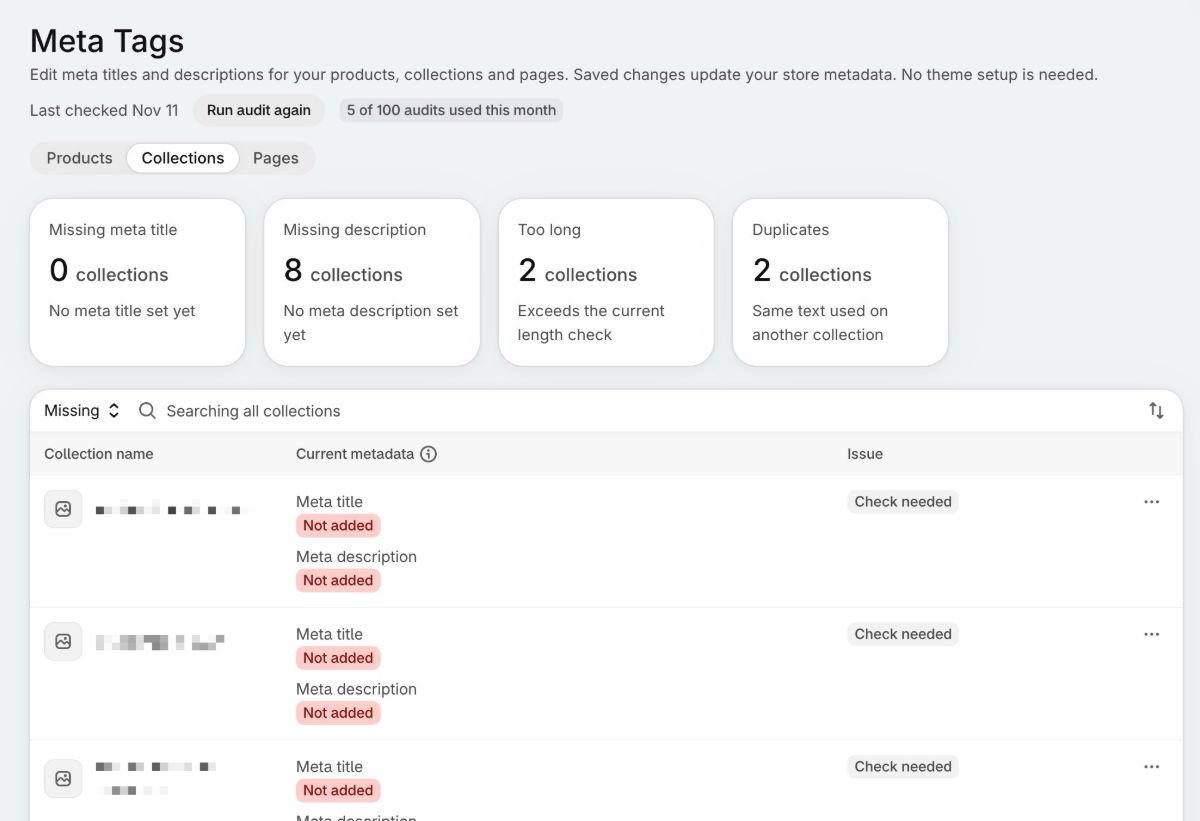
Meta titles and descriptions are what search engines show and what AI tools read when they summarize a page. Risify shows them for every product, collection and page on one screen, flags missing, too-long and duplicate tags, and lets you fix them with a Google preview. Shopify's own interface requires opening each page individually.
Finds the Gaps with Regular Audits
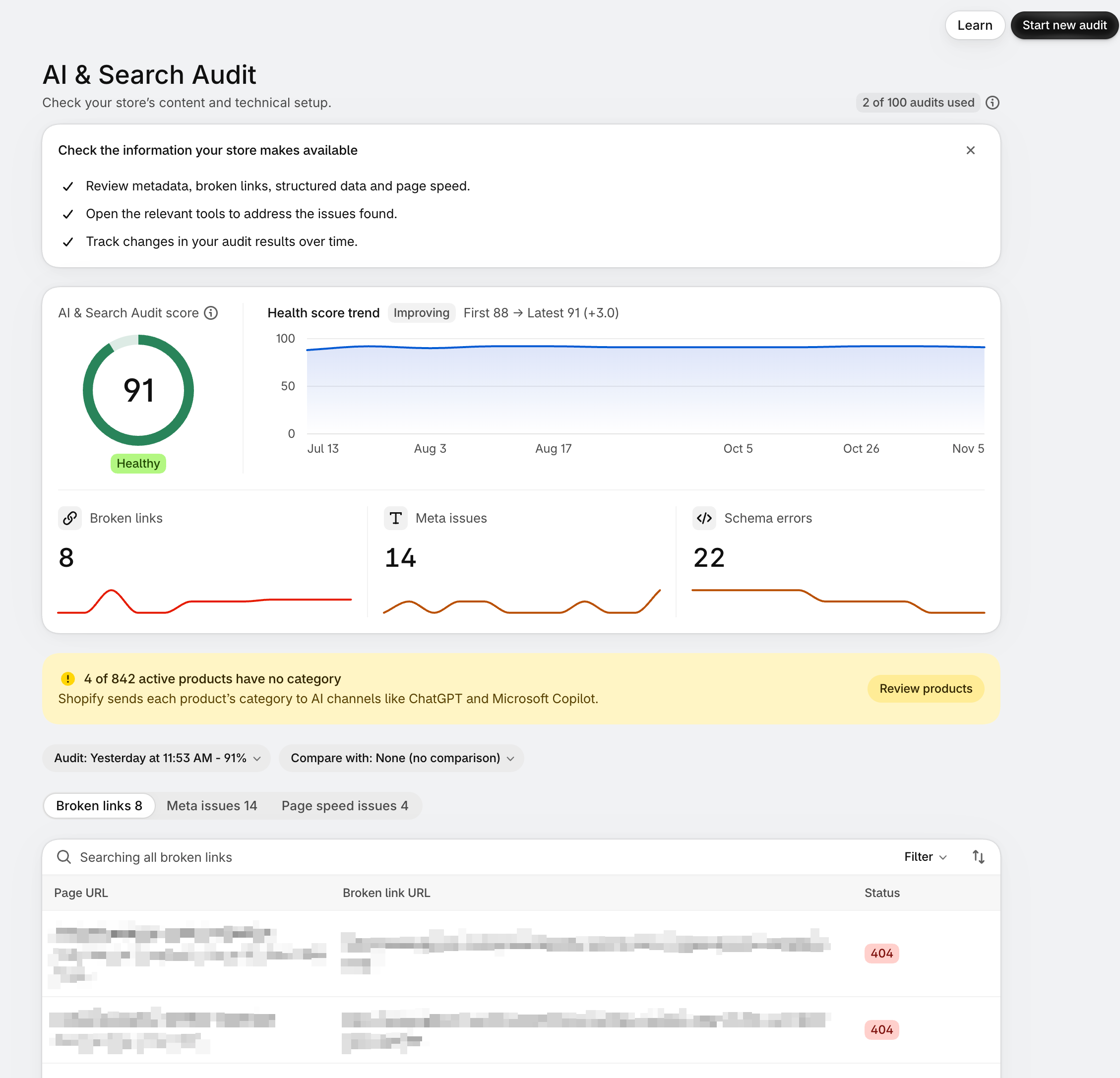
The AI & Search Audit scans for broken links, meta issues, schema errors and page speed problems, scores your store out of 100 and shows the trend across audits. Page Optimization lists every product, collection and page with a checklist of the signals it still lacks. Together they tell you where to work next.
Creates in Your Voice
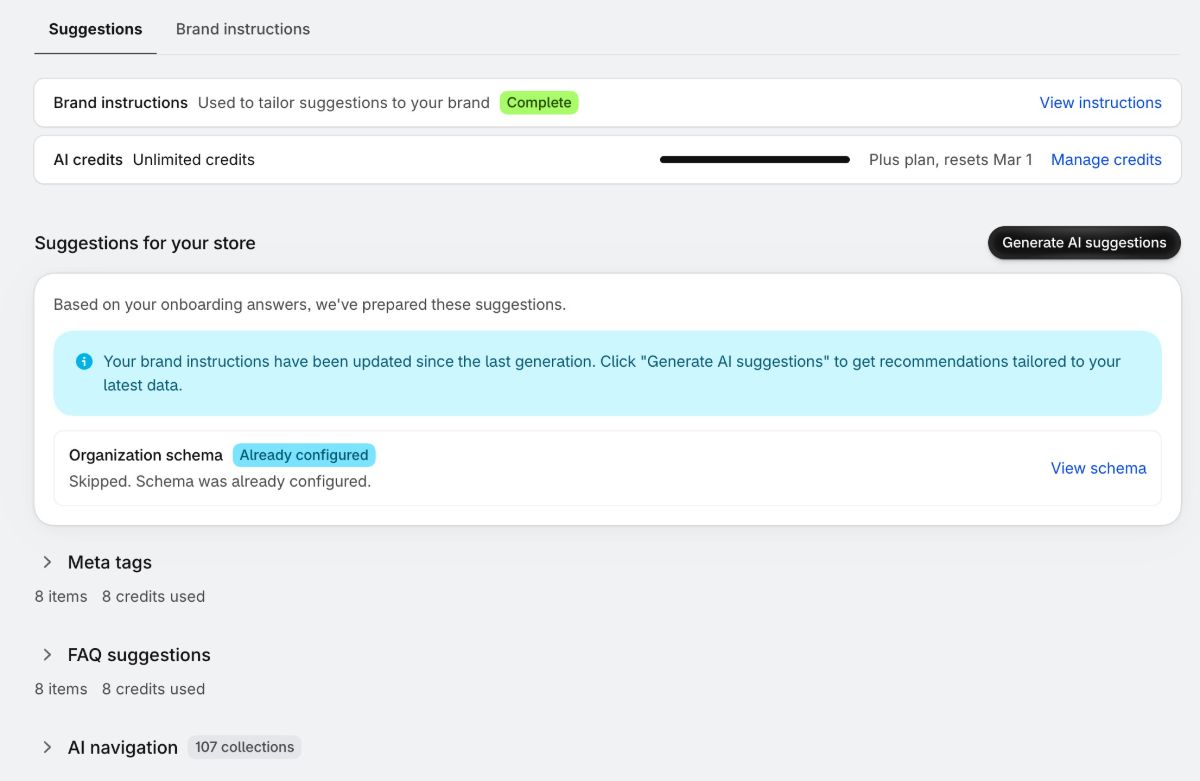
Risify AI generates FAQs, meta tags and navigation suggestions, and fills in Organization structured data, following the Brand instructions you set up. It turns the structure above into content without you writing every line, and everything it produces is a suggestion for you to review.
Tracks Your AI and Search Visibility
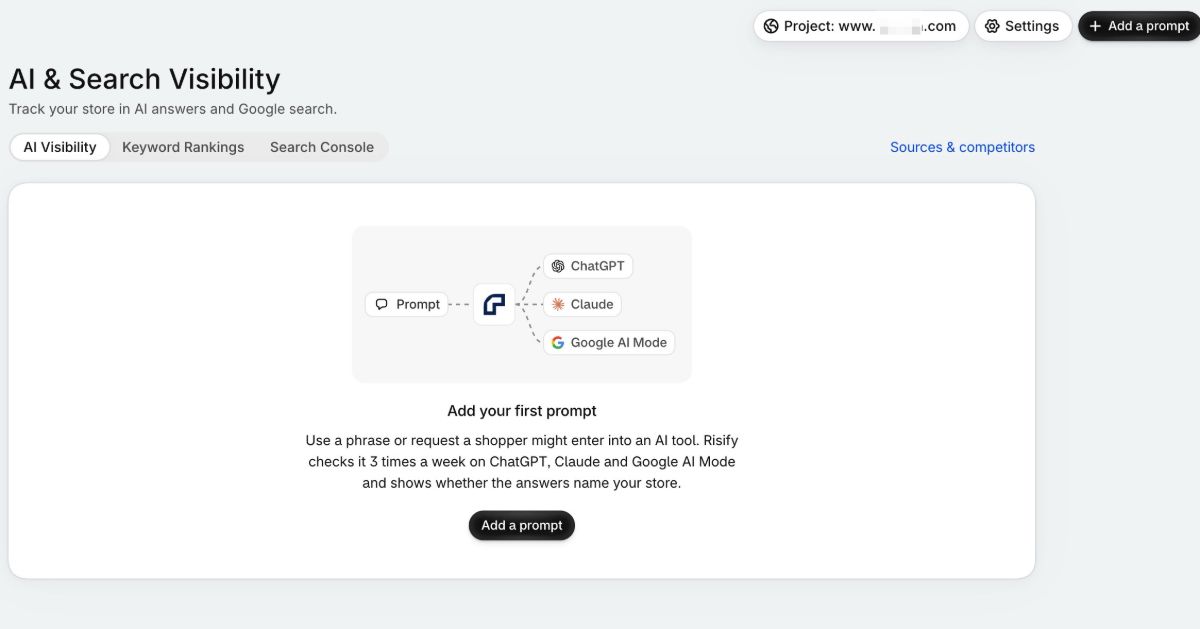
Once the foundation is in place, AI & Search Visibility shows whether it is being picked up. AI Visibility tracks your shoppers' questions on ChatGPT, Claude and Google AI Mode and reports whether your store is named or cited, and who is named instead. Keyword Rankings tracks your Google positions, and Search Console data appears alongside. This is how you know which of the work above is paying off and where to focus next.
Supports Conversion at Checkout
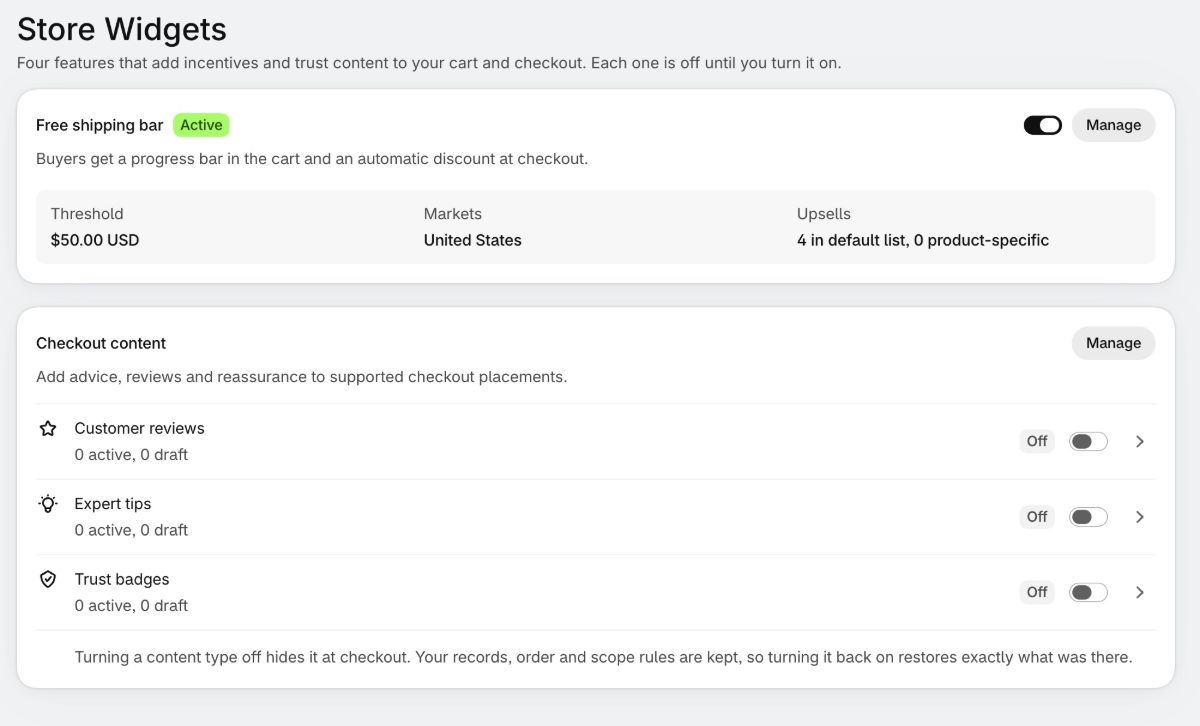
Store Widgets add a free shipping bar to the cart and customer reviews, expert tips and trust badges to checkout, through Shopify checkout extensions. Visibility brings shoppers in; this helps them finish.
What Risify Doesn't Do
Risify Does Not Fix Broken Links Automatically
The audit shows you each broken link, the page it is on and the URL it points to, but you create the redirect or fix the link yourself in Shopify. Risify gives you visibility; the fix is a manual step.
Risify Does Not Guarantee Rankings or AI Recommendations
No tool can guarantee a position in Google or a mention in an AI answer. Risify builds the foundation that gives your store the best chance and shows you what is happening, but results depend on competition, content quality, backlinks, domain authority and how each AI tool chooses its sources.
Risify Does Not Control What AI Tools Say
AI Visibility reports what ChatGPT, Claude and Google AI Mode say about your store and which sources they use. It cannot change their answers directly. What you can change is what your store makes available for them to read, which is what the rest of Risify is for.
Risify Does Not Replace Google Search Console
Search Console provides data directly from Google about how your site is crawled and indexed. Risify shows that data inside the app, but the property, its coverage reports and its notifications live in Google. Use both.
Risify Does Not Write All Your Content
Risify AI speeds up FAQs, meta tags and navigation, but the output needs human review. AI suggestions are starting points. Review, edit and approve everything before saving, so it matches your brand and is accurate.
Risify Does Not Handle Paid Advertising
Risify focuses on organic visibility in search engines and AI tools. It does not manage Google Ads, Meta Ads or any paid campaigns.
"Isn't This Just Standard SEO?"
In many ways, yes, and that is the point. The best SEO practices and the best AI visibility practices are converging.
Well-structured content, clear site hierarchy, accurate metadata and proper structured data are what both search engines and AI tools look for. When you do SEO right, you are already building the foundation for AI visibility. They are not separate strategies.
What has changed is how that foundation is used. Search engines use it to rank pages. AI tools use it to form answers, cite sources and recommend products. The same structured data serves both.
That is where Risify sits. It does not reinvent SEO. It gives Shopify merchants the tools to build that foundation properly, structured data, organized navigation, centralized FAQs and accurate metadata, and then measures both outcomes, your Google rankings and your presence in AI answers. One effort, both results.
Summary
Risify optimizes your Shopify store's AI and search visibility by building what search engines and AI tools need to understand and recommend it: structured data, connected navigation, FAQs and accurate metadata, with audits to find the gaps and Risify AI to fill them. AI Visibility and Keyword Rankings then show you the result.
It does not auto-fix broken links, guarantee rankings or AI mentions, control what AI tools say, replace Google Search Console, or manage paid ads. It gives you the structure, the content and the measurement; you, or the Risify Plus team, put them to work.