AI tools like ChatGPT, Claude, Google AI Mode, Gemini and Perplexity answer shopping questions with product and store suggestions. They build those answers from the pages they can read and the structured data those pages carry.
If your store sends clear signals, AI tools can interpret and recommend your products more accurately. If it doesn't, they fall back on marketplaces and competitors whose pages are easier to read.
This guide explains what AI readiness means for a Shopify store, how Risify helps you build it, and how you can measure whether it's working.
👉 Curious how Risify can help your store get AI-ready? See how to fix Shopify AI visibility gaps to learn best practices.
How Do AI Search Tools Find Product Information?
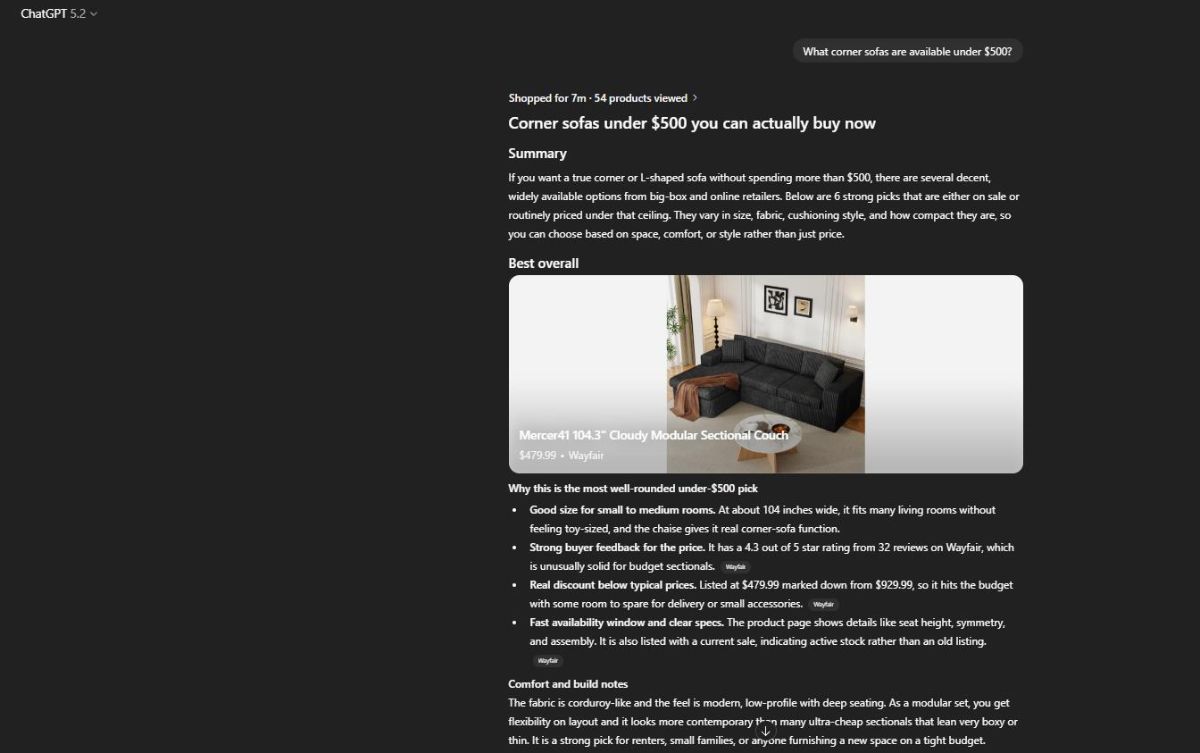
AI tools gather product information in two ways. Some browse the web live when a shopper asks a question, reading pages and listing them as sources. Others draw on search engine indexes and content they have already processed. Most combine both.
Either way, they depend on the same things: pages that are reachable, content that states clearly what a product is, and structured data that confirms it. Stores with unclear hierarchies, missing metadata or unstructured content get overlooked because AI tools cannot confidently interpret what they sell.
The clearer your store's structure, the more likely AI tools will include your products in relevant answers, and the more likely they will cite your pages as sources rather than a marketplace listing.
Why Does Schema Markup Matter for AI Search?
Structured data (schema markup, published as JSON-LD) is the most direct way to tell search engines and AI tools what a page contains, in a format they can parse without ambiguity. It defines exactly what type of content exists: a product with a price and stock status, an organization with a name and contact details, a set of questions and answers, a breadcrumb path.
Risify sets up seven schema types, each with its own switch on the Structured Data page:
- Organization: who runs the store: name, logo, contact details and address.
- Team members: people published for your organization.
- Website: your site's name and description.
- Product: price, stock, shipping, returns and ratings on product pages.
- Article: publication dates and authors on blog posts.
- Breadcrumb: the page's place in your store.
- FAQ: questions on pages that show the Risify FAQ section.
Stores selling in several languages can add languages so translatable fields follow each market (Plus plan). On the Standard plan, you set structured data up yourself with guidance from the Risify team. On Plus, the Risify team handles implementation.
How to Verify Your Schema Markup
After turning on structured data, you can check that it is published correctly:
- Debug mode on the Structured Data page shows the JSON-LD on any page of your storefront.
- Test in Google opens Google's testing tool for a page, so you can see which rich result types are detected and whether there are errors.
- The AI & Search Audit counts schema errors across your store each time it runs, so you can see when something breaks after a theme or product change.
- Google Search Console , connected inside Risify, shows how Google is indexing your pages.
How Do Structured FAQs Help AI Tools?
FAQs give AI tools direct question-and-answer pairs to draw on. When a shopper asks "What materials are used in handmade ceramic mugs?", an AI tool can use FAQ content that matches the question, and cite the page it came from.
For this to work, FAQs need FAQ structured data so AI tools recognize them as structured Q&A rather than plain text. With Risify's centralized FAQs, every page that shows the FAQ section carries the schema automatically, and the Coverage tab shows which products, collections and pages still have no FAQs.
How Do Product-Collection Relationships Affect AI Visibility?
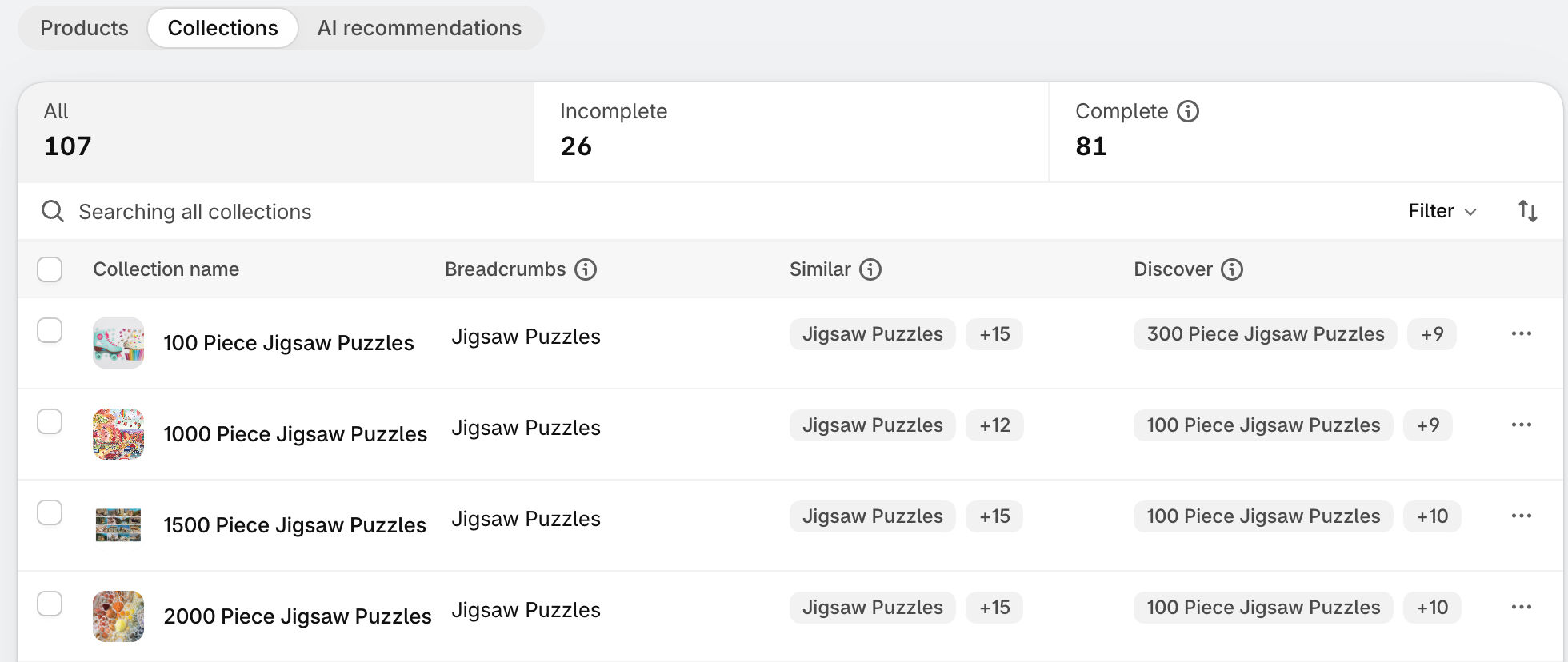
AI tools perform better when they understand how your products relate to each other and to your collections. A store with clear category hierarchies, defined breadcrumb paths and logical navigation gives AI tools context about what you sell and how your catalog is organized.
Without this structure, confusion follows. If a product appears in multiple collections with no clear primary category, or a collection dead-ends without showing related categories, AI tools struggle to place your products.
Risify's Navigation page handles this with Breadcrumbs, Similar and Discover, and Risify AI's semantic sync reads your collections to recommend how they should connect.
Which Risify Features Contribute to AI Readiness?
AI readiness is not a single setting inside Risify. It is the result of using multiple features together:
- AI & Search Visibility: helps you track your store's visibility in top AI tools, along with keyword rankings tracking.
- Structured Data: publishes JSON-LD for products, organization, website, team members, articles, breadcrumbs and FAQs.
- FAQs: structured Q&A content with FAQ schema on products, collections and pages, with coverage tracking.
- Navigation: Breadcrumbs define product-collection hierarchies with Breadcrumb schema; Similar and Discover link related collections.
- Meta Tags: complete, accurate titles and descriptions for AI tools to reference when summarizing pages.
- Page Optimization: a checklist for every product, collection and page showing which signals are still missing.
- Risify AI: generates FAQs, meta tags and navigation suggestions in your brand voice, so the content AI tools read is consistent.
- AI & Search Audit: finds broken links, meta issues, schema errors and page speed problems that could stop AI tools and search engines from reading your store.
How Long Does It Take for AI Tools to Reflect These Changes?
Expect a delay of several weeks to a few months before improvements appear in AI-generated responses. Consistent structure and ongoing schema maintenance help ensure your store remains accurately represented over time.
Visit risify.app to explore features, view pricing, or book a demo with the team .